
TAKING FLIGHT
Many points along the timeline of St. Barth’s history show the power of transformational events. In the early days, conflicts with both indigenous peoples and British privateers sometimes left the island’s French population decimated or displaced. Hurricanes wrought massive destruction on Gustavia and its fleet, making severe economic setbacks a grim and regular reality. Halfway through the 20th century, however, a new and sudden change occurred that would transform the island more radically and permanently than any event since the sails of Columbus’s caravelles appeared on the horizon. Aviation came to St. Barth, though it could be said that it was the island itself that took flight.
“The story of the birth of aviation in St. Barth cannot be told without invoking the name of Rémy de Haenen, the charismatic adventurer-businessman.”
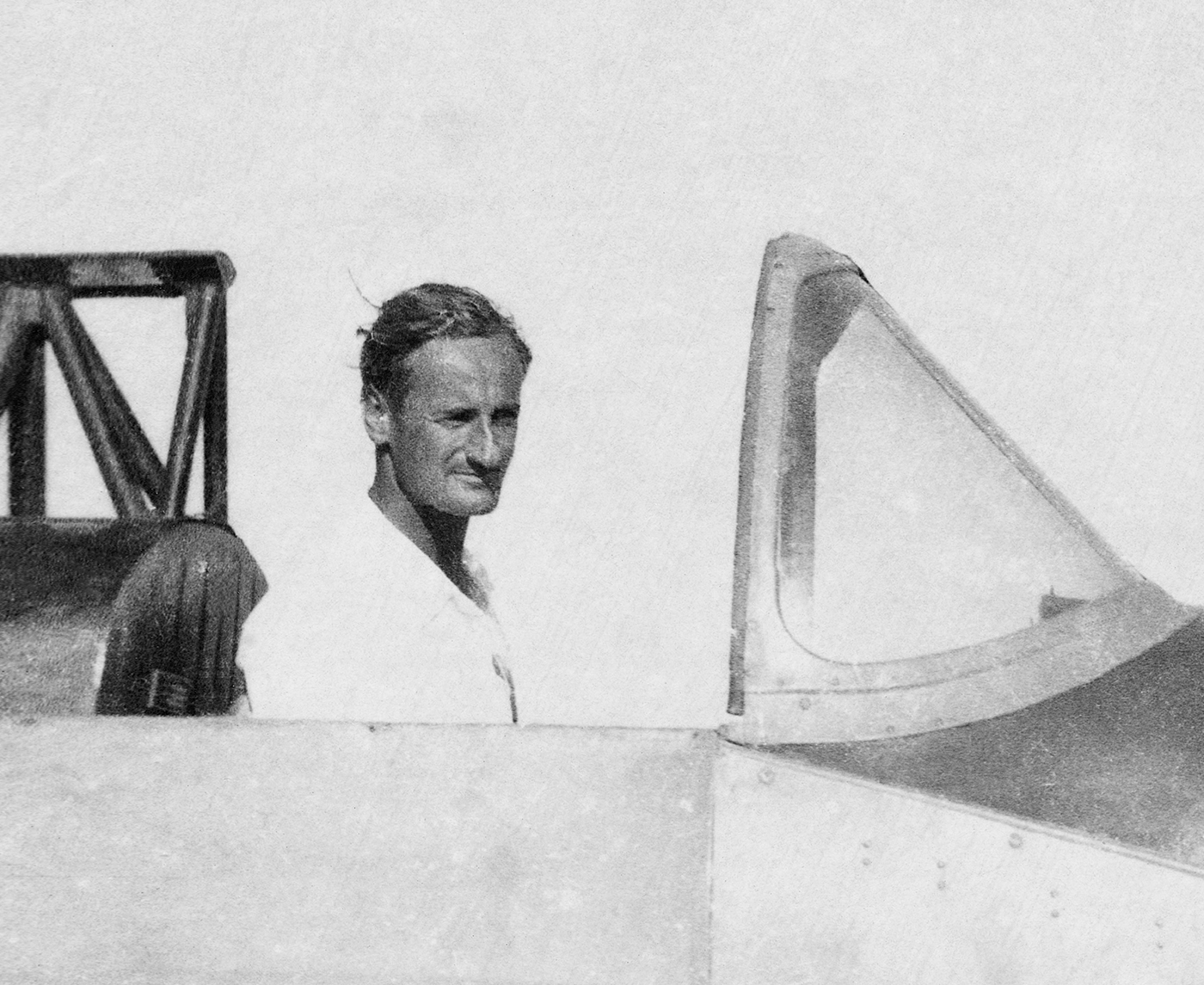
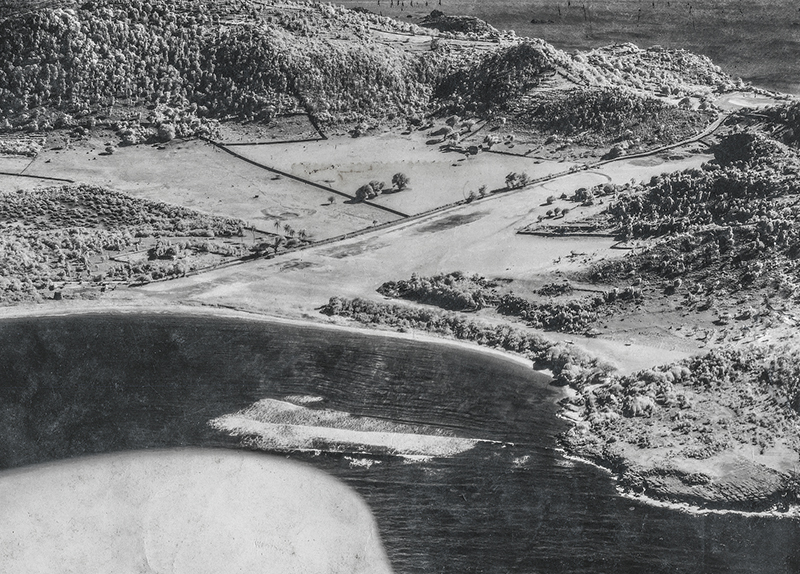
The story of the birth of aviation in St. Barth cannot be told without invoking the name of Rémy de Haenen, the charismatic adventurer-businessman who did much to change what was isolated, bucolic and sleepy to connected, developed and dynamic. His life is the source of legends told and retold until the true and the apocryphal are nearly impossible to distinguish: the stunningly far-sighted real-estate deal, the daring escape from the law, the gunshot in the town-hall ceiling. But one fact is known: early in 1946, the wheels of de Haenen’s Rearwin Sportster aircraft touched the grassy earth of the savannah in St. Jean. At one time, even de Haenen himself admitted he was uncertain of the exact date, as his records were lost when his office in the Moulin on St. Jean beach was inundated by a hurricane in 1960. (Notes in his own writing even have “debut 1945” overwritten to read “debut 1946.”) The day might not have seemed momentous at the time, and the landing may have been witnessed by as many goats and cattle as people, but it foreshadowed a future that no one at the time imagined, except perhaps the visionary de Haenen himself.
The origins of de Haenen’s bright-red Sportster were fittingly international, it having been built in the U.S. and christened with the Spanish name “Cucaracha” by a previous owner. A high-wing two-seater with a cruising speed of about 100 mph, the sportster’s good visibility and nimble handling made it perfect for the challenges of tricky island landings. De Haenen sorely lamented its early demise in a crash on the island of Tintamarre at the hands of a joy-riding R.A.F. pilot. Accustomed to the power of the British Spitfire’s massive Rolls Royce power plant, the pilot miscalculated the capabilities of the Cucaracha’s 85-hp LeBlonde engine and hit a low wall while attempting a loop. “On returning from my travels, I found just a pile of wood, canvas and metal that no longer looked anything like an airplane,” de Haenen wrote.
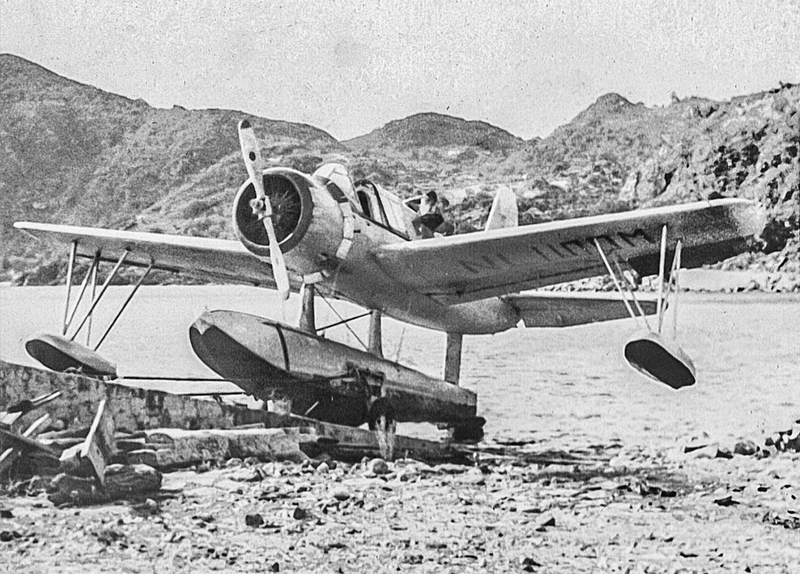
In the year after his landing in St. Barth, de Haenen acquired a number of aircraft to create his own Caribbean airline, Compagnie Aérienne Antillaise, flying three Vought Kingfisher floatplanes purchased from U.S. Navy surplus, a couple of tri-motor Stinson Model A’s, and a Sikorsky S-41 “Flying Boat.” By his own account, this loosely regulated fleet operated briskly and efficiently for about three years in the late 1940’s, until increasing bureaucratic interference made it impossible to do business. De Haenen traveled to France to apply for proper authorization, a task he regarded as a frustrating waste of valuable time and energy. Once again, his absence invited disaster, and in just the few weeks while he was gone, the company suffered two serious accidents that effectively brought the airline’s short heyday to an end.
Throughout most of the 1950’s, de Haenen pursued his aviation dreams on a smaller scale, ferrying shipments of langoustine and fruit around the Antilles in war-surplus, twin-engine Cessna UC-78’s. Nicknamed the “Bamboo Bomber” for its wooden airframe, this versatile aircraft was used as a trainer for B-17 and B-24 pilots in WWII, and many of the planes found second lives as transport craft in the years following. In the late 1950’s, de Haenen also flew a Convair L-13, an oddly designed and very obscure Korean War workhorse. He took advantage of the L-13’s STOL (Short Takeoff and Landing) capabilities in 1959 to make it the first aircraft ever to be landed on Saba, where the record-holding shortest-runway-in-the-world is a mere 400-meters followed by a precipitous drop into the sea.
Though Rémy de Haenen turned his entrepreneurial energies toward other projects during the 1960’s, aviation remained close to his heart and an ever-present part of his life. While he developed the famed Eden Rock hotel, helped boost tourism to the island, and even served as St. Barth’s mayor from 1962 to 1977, he never lost his love of the skies. He retired from “the left-hand seat” in the early 1980’s, proudly estimating that in his lifetime he had taken off and landed nearly 25,000 times on the various islands of the Caribbean. Of all those landings, that particular one over 70 years ago on the savannah in St. Jean carries a special significance in St. Barth’s history, a moment marking the transition from one era to the next, from the past to the future.