
liquid Gold
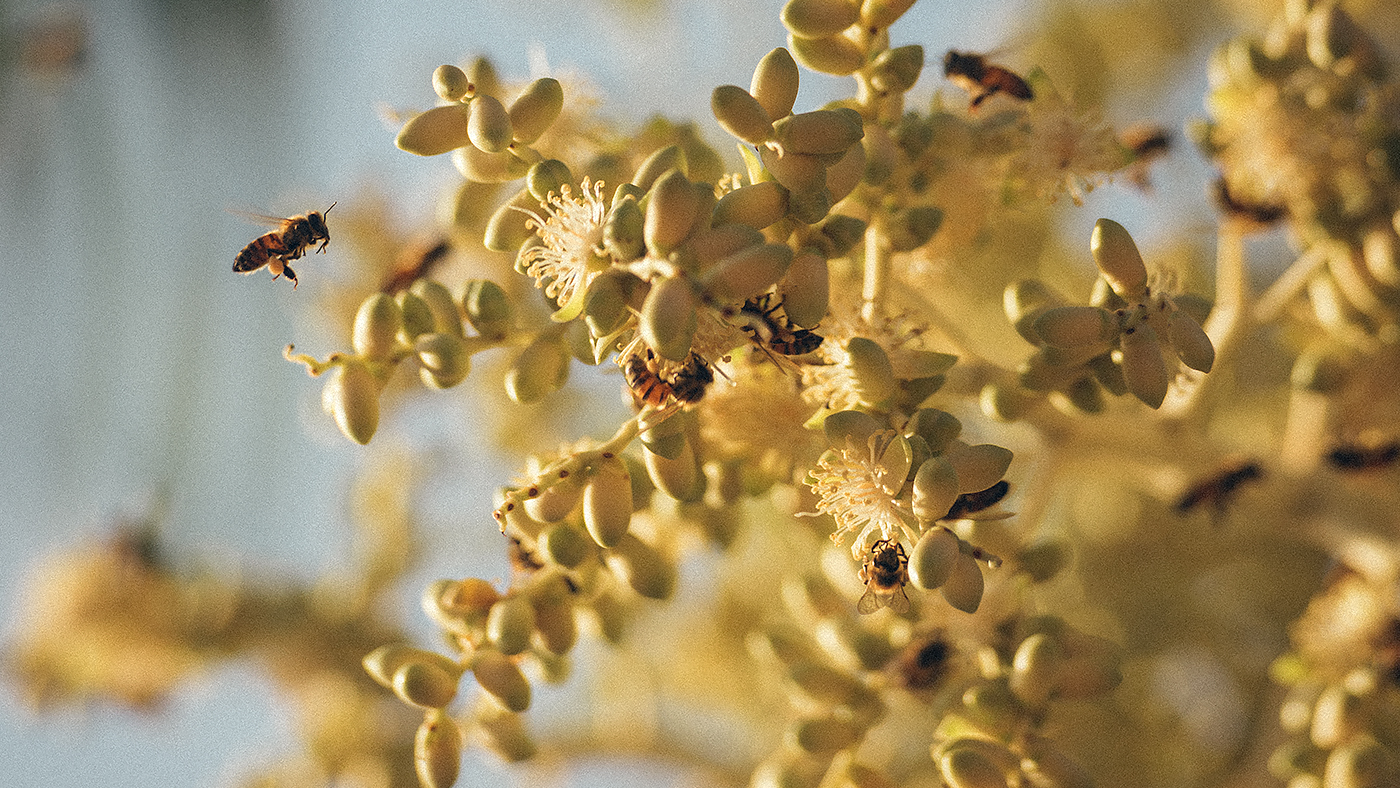
The honey bee may very well be one of the most controversial members of the animal kingdom. It gets shooed and swatted away, and sends many running in fear of its potent sting, but it’s also a critical pollinator that plays an important role in maintaining life as we know it. As an added bonus, it also happens to produce the most delicious, golden liquid on the planet—and not without feat. The average worker bee makes about one-twelfth of a teaspoon of honey in its lifetime, which can last anywhere from three to six weeks. It takes approximately 556 worker bees to make just one pound of honey, with each bee collecting nectar from roughly two million flowers. It’s the production of a masterpiece as painstaking as they come.
“Matthurin Brin first brought the bees over via plane from Curacao in the 1950s, carrying them in makeshift boxes, which he held on his lap.”
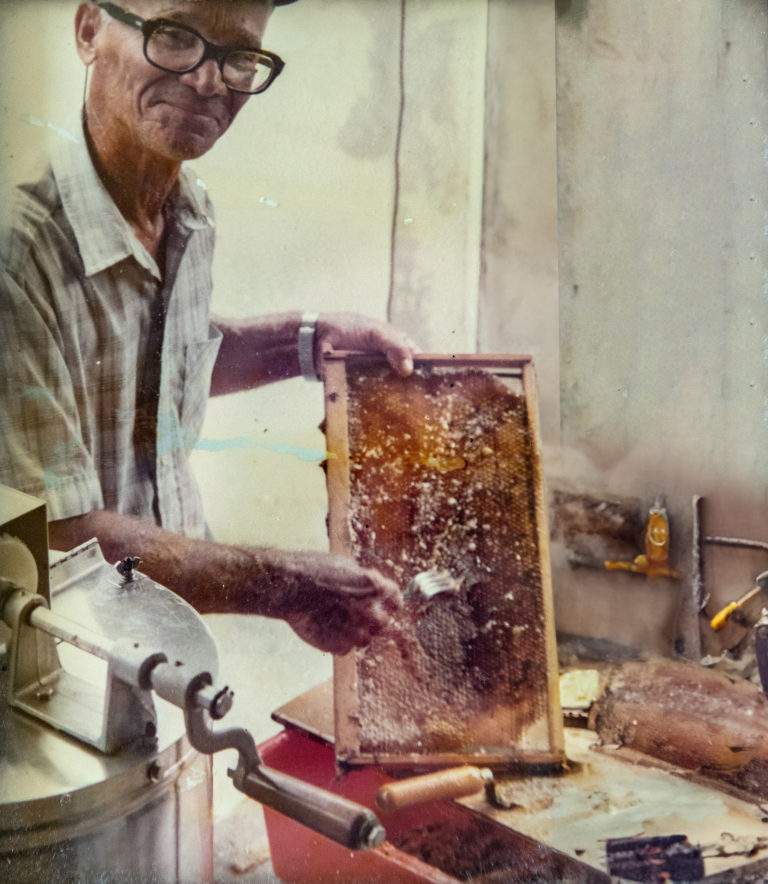
St. Barth has an intimate relationship with the honey bee, and the delicious fruits of its labor, though it has been an inhabitant of the island for only 40 years. Matthurin Brin first brought the bees over via plane from Curacao in the 1950s, carrying them in makeshift boxes, which he held on his lap. Following Hurricane Donna in 1960, Mr. Brin retired in St. Barth, where he was able to pursue his beloved beekeeping as a full time occupation after much convincing from his family and help from his son-in-law, Antoine Laplace. Two friends and pilots, Claude Deravin and former mayor Remy de Haenen assisted by bringing hives back from other islands. Mr. de Haenen remained skeptical of Mr. Brin’s pursuit, but continued to help with the transport and expedited entry of the hives. The ones Mr. Deravin brought from Guadeloupe were calm and friendly, while those Mr. de Haenen brought from Santo Domingo were very aggressive.
Mr. Brin was able to breed the two species, creating a hybrid with a much calmer disposition. At the peak of his beekeeping, he had around 20 beehives producing approximately 400L of honey every year. With the passing of each hurricane the bees were always seriously impacted, but these incredibly resilient creatures would instinctively double their efforts and within two months a noticeable increase in offspring and activity was evident.
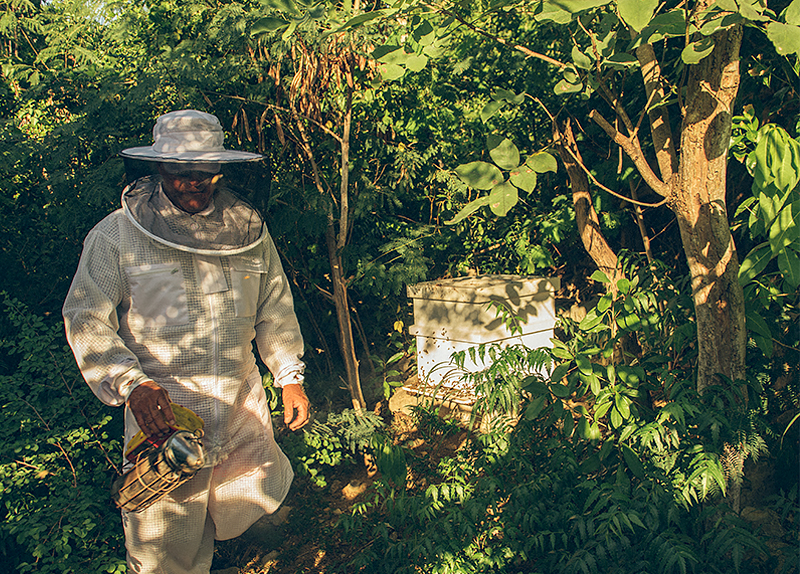
There are few local beekeepers that have had the patience and passion to commit decades to the growth and maintenance of these buzzing allies, but Gaston Questel is one of them (the third on the island to be exact). Gaston has been beekeeping on St. Barth for over 15 years (with help from his cousins, Les Vikings)—what began as curiosity turned into lifelong dedication. After much time learning and studying the nuances of this incredible species, he is now able to produce his own queens and is careful to employ conscientious breeding at all times. By mixing certain types of bees, he has found it possible to create calmer offspring, having to do away with those that are too aggressive.
The French black bee is the main species found on the island. During the importation process, they pass through quarantine before being safely handed off to their keeper. Each batch of bees has different temperaments and behavior, which makes tending to them far from easy. Gaston is often called upon to deal with any bee disturbances, especially when it’s time for wild species to migrate. As was the case with past hurricanes, Irma unfortunately decimated a large quantity of Gaston’s beehives, but he is slowly working to bring them back to a place of wellbeing.
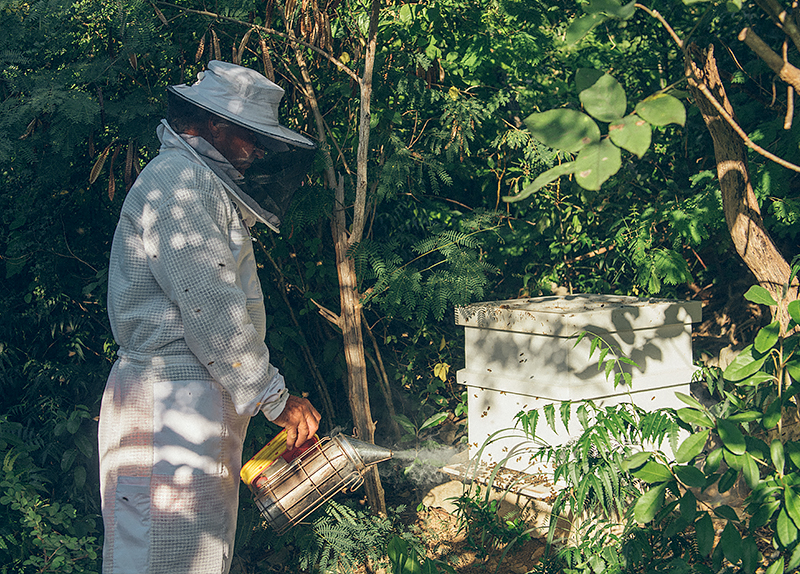
Gaston’s dedication to an age-old practice leaves him feeling fulfilled, as he enjoys combining the experience, passion and knowledge needed to accomplish such work, but it also leaves him with something else: a rare variety of coveted honey that is dark and thick with an almost salty caramel-like taste. If he’s lucky, he can produce one or two batches a year, making this St. Barth hidden treasure an exclusive taste of one of nature’s most inspiring art forms.